
Mohs Micrographic Surgery
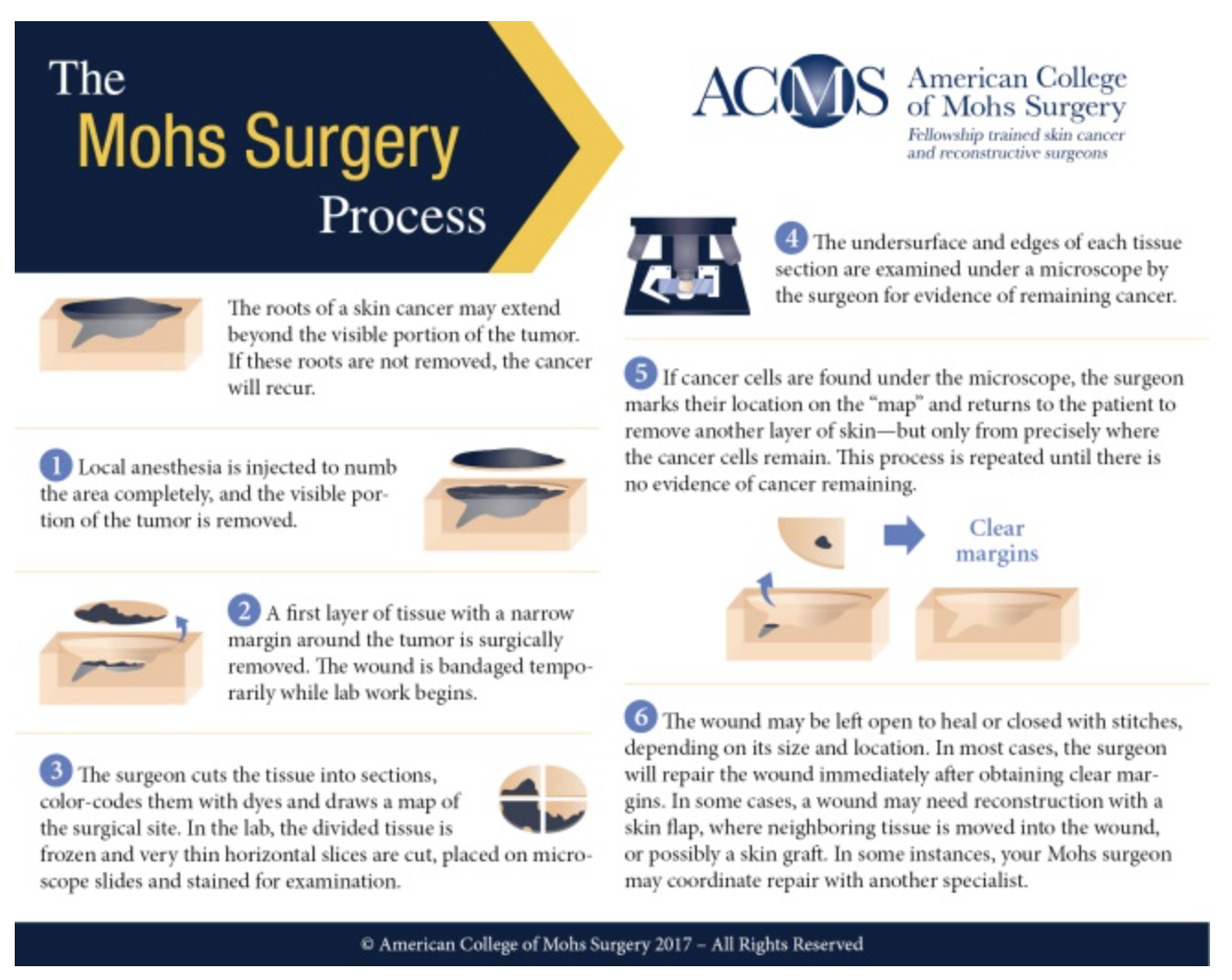
Mohs micrographic surgery is a highly specialised technique used to treat certain skin cancers with the highest possible level of accuracy. The procedure removes cancerous tissue layer by layer, with each layer examined under a microscope during the surgery until no cancer cells remain.
This precise approach allows complete removal of the skin cancer while preserving as much healthy surrounding skin as possible. As a result, Mohs surgery offers the highest cure rates and often achieves the best functional and cosmetic outcomes, particularly in sensitive areas such as the face.
Why Choose Mohs Surgery?
Mohs surgery provides several important advantages:
Highest cure rates of any skin cancer treatment method
Up to 98-99% five-year cure rate for many skin cancers
Complete microscopic examination of all surgical margins
Maximum preservation of healthy skin
Reduced risk of tumour recurrence
Often results in smaller wounds and improved cosmetic outcomes compared with standard excision
For more information about Mohs Surgery please contact Shades Dermatology.
Mohs Micrographic Surgery
Your Mohs Specialist will discuss the most suitable option based on the location and size of the wound. Also like any surgical procedure will discuss risks associated with skin cancer surgery.
Learn more about Mohs Surgery
Who Is Mohs Surgery Suitable For?
Mohs surgery is commonly recommended for:
Skin cancers located on the face, ears, nose, lips, eyelids, scalp, hands or other cosmetically sensitive areas
Recurrent skin cancers that have returned after previous treatment
Large skin cancers
Aggressive or high-risk tumour subtypes
Skin cancers with poorly defined borders
Cases where preservation of healthy tissue is especially important
Your dermatologist will discuss whether Mohs surgery is the most appropriate treatment for your individual situation.
Who Performs Mohs Surgery?
Mohs surgery is performed by a dermatologist who has completed additional advanced fellowship training in Mohs micrographic surgery and skin cancer reconstruction.
During the procedure, the Mohs surgeon acts as both the surgeon and pathologist, removing the tissue, examining it under the microscope, and determining if additional treatment is required. This allows immediate and precise assessment of the entire tumour margin.
What Happens During Mohs Surgery?
Mohs surgery is performed under local anaesthetic as a day procedure.
The process generally involves:
The skin cancer is carefully removed with a thin surrounding layer of tissue.
The tissue is mapped and processed in an on-site laboratory.
The specimen is examined under the microscope.
If cancer cells remain, the exact location is identified and only the affected area is removed.
This process is repeated until all margins are clear.
Because tissue analysis takes place during the procedure, patients should expect to spend several hours at the clinic.
The length of treatment varies depending on the size and complexity of the tumour.
Most patients should allow approximately 4-6 hours, although some cases may be shorter or longer. Between stages, a dressing is applied and patients rest in the recovery area while tissue processing is completed.
Many patients can drive home following treatment, although this depends on the size and location of the surgery and any reconstruction performed. Your doctor will advise you based on your individual circumstances.
Recovery varies depending on the site and complexity of the procedure. Most patients return to many normal activities within a few days, although complete healing may take several weeks.
How Is the Wound Repaired?
Once the skin cancer has been completely removed, the wound may be repaired using one of several methods:
Direct Closure: The wound edges are stitched together in a straight line.
Local Skin Flap: Nearby skin is repositioned to repair the area while maintaining natural contours.
Skin Graft: Skin is taken from another site, commonly behind the ear or from the neck, and used to cover the wound.
Natural Healing: In selected cases, the wound may be allowed to heal naturally with regular wound care.
Specialist Reconstruction: For some complex cases, reconstruction may be performed by or in collaboration with a plastic surgeon or oculoplastic surgeon.
Your Dermatologist will discuss the most suitable option based on the location and size of the wound. Also like any surgical procedure will discuss risks associated with skin cancer surgery.
Useful links:
Medical Disclaimer
The information provided here is for general educational purposes only. All medical and cosmetic procedures involve some risks. Results achieved for our patients that may be shown in before and after pictures on this website are specific to the individual, and may not be achievable for another patient. For specific advice regarding your skin condition, please book a a consultation with one of our Dermatologists at Shades Dermatology.
Always seek the guidance of your doctor or other qualified health professional with any questions you may have regarding your health or a medical condition. Never disregard the advice of a medical professional, or delay in seeking it because of something you have read on this website.
Healthy skin of all Shades.
Book your consultation at Shades Dermatology
To book your next appointment with one of our Dermatologists, either follow the booking link below via HealhtEngine, or call (07) 3184 3442 during office hours & our friendly staff will assist you.